
How Often to Water Bonsai Trees
- Mar 29
- 6 min read
A bonsai rarely follows a tidy schedule. One warm afternoon near a bright window can dry the soil far faster than a cool, cloudy week, which is why learning how often to water bonsai starts with observation rather than the calendar.
For many beginners, watering feels like the most nerve-racking part of bonsai care. That makes sense. Watering too little can weaken roots and crisp tender growth, while watering too often can leave the soil heavy and starved of oxygen. The good news is that bonsai are not mysterious. Once you understand what affects moisture and what your tree is telling you, the rhythm becomes much more natural.
How often to water bonsai depends on conditions
The simplest honest answer is this: water your bonsai when the soil begins to feel slightly dry near the surface, not on a fixed daily or weekly plan. Some trees may need water every day in summer. Others may only need it every few days, especially in cooler indoor settings.
Several factors shape that timing. Tree species matters because tropical bonsai and temperate bonsai use water differently. Pot size matters too. A shallow bonsai pot dries out faster than a deeper container because there is less soil holding moisture. Soil mix plays a major role as well. Fast-draining bonsai soil dries more quickly than dense, organic potting mixes, but it also supports healthier roots by allowing better airflow.
Light, temperature, humidity, wind, and season all shift the pace. An outdoor juniper in July sun will not drink like an indoor ficus in January. Even two trees of the same species can need different care if one sits near an air vent and the other lives in a more stable spot.
That is why bonsai care is often less about strict rules and more about quiet attention. A quick daily check is better than a rigid watering schedule.
How to tell when your bonsai needs water
The best tool is still your finger. Gently touch the top of the soil. If the surface feels dry, check a little deeper - about a half inch down for smaller bonsai, a bit more for larger ones. If that layer is just starting to dry, it is usually time to water. If it still feels clearly moist, wait and check again later.
You can also learn from the weight of the pot. A recently watered bonsai feels noticeably heavier than one that has dried out. Over time, lifting the pot becomes a fast and surprisingly accurate habit.
The soil itself offers cues. Dry bonsai soil often looks lighter in color and may begin to pull slightly from the edges of the pot. Leaves can also signal trouble, but leaf symptoms are a later message. Wilting, yellowing, or crisp edges often mean the tree has already been stressed, either from drought or from overwatering.
If you are deciding between the calendar and the soil, trust the soil.
How to water bonsai the right way
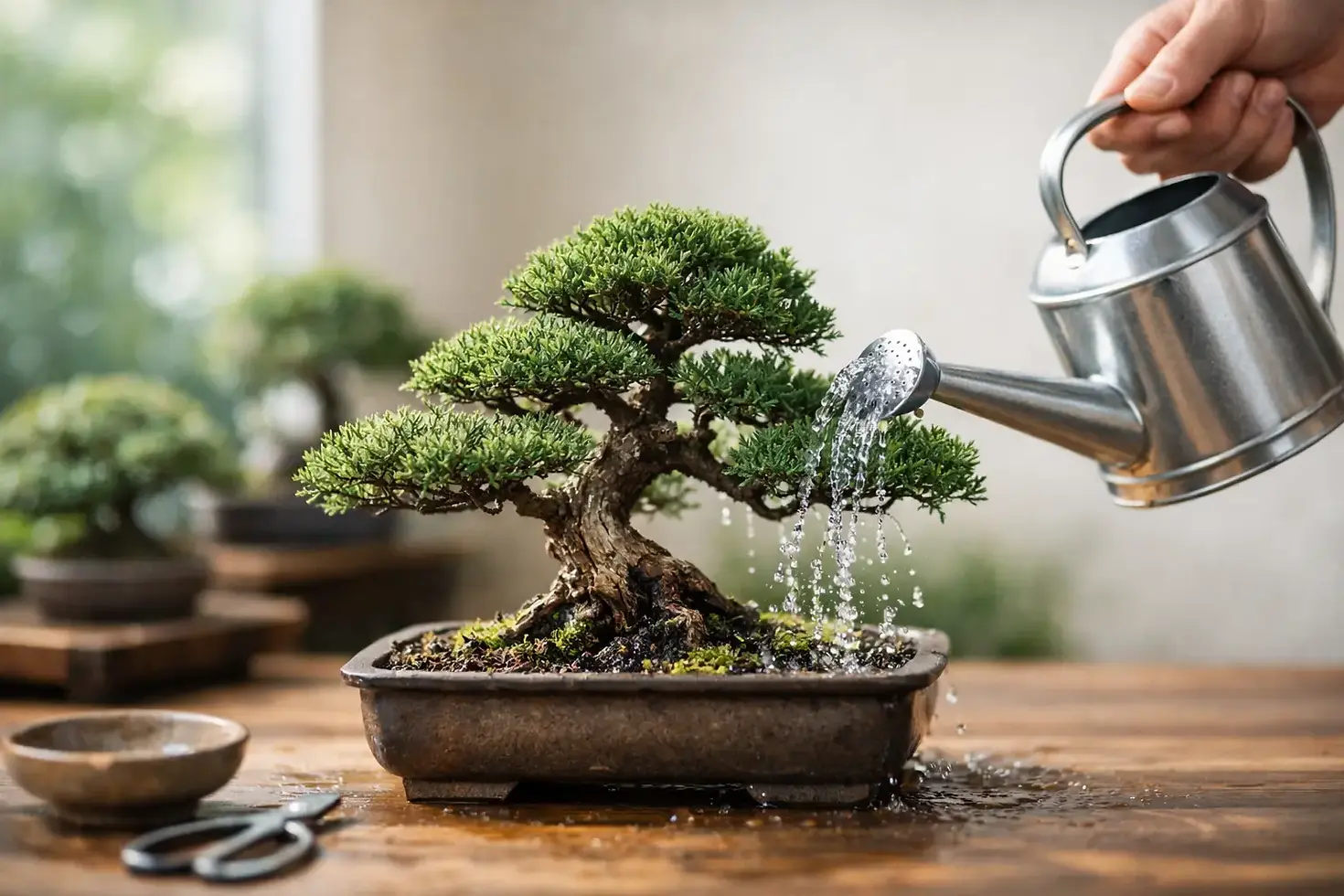
When it is time to water, water thoroughly. This matters just as much as timing. A light splash across the surface is rarely enough. You want to soak the soil until water runs from the drainage holes, then allow the excess to drain away.
This full watering helps moisten the entire root ball instead of only the top layer. It also encourages roots to grow evenly through the pot. If the soil has become very dry, water may rush through quickly at first. In that case, wait a minute and water again more slowly so the soil can absorb it.
Avoid letting your bonsai sit in standing water for long periods unless you are using a humidity tray designed to keep the pot above the water line. Constantly wet roots are vulnerable roots.
A watering can with a fine rose is ideal because it delivers a gentle shower that does not blast away soil. For small indoor bonsai, a sink or hose sprayer on a soft setting can also work well.
Seasonal changes in how often to water bonsai
Seasonal changes are one of the biggest reasons bonsai watering can feel inconsistent at first.
Spring and summer
During active growth, your bonsai will usually need more frequent watering. Warmer temperatures, stronger light, and new foliage all increase water use. In peak summer, some outdoor bonsai may need checking twice a day, especially in hot, dry, or windy weather.
That does not mean they always need water twice a day. It means conditions change quickly enough that a morning-only glance may not be enough.
Fall
As temperatures cool and growth slows, watering usually becomes less frequent. Soil stays moist longer, and the tree’s demand eases. This is a good season to reset your habits and avoid continuing a high-summer routine that the tree no longer needs.
Winter
In winter, many bonsai use less water, but they should not be ignored. Indoor bonsai can still dry out because of heating systems and low humidity. Outdoor dormant bonsai may need less frequent watering, yet their roots still must not dry completely. Watering during a milder part of the day is often best when freezing temperatures are a concern.
Indoor vs. outdoor bonsai watering
Indoor bonsai often live in more controlled conditions, but that does not always mean simpler watering. Dry indoor air, forced heat, and bright windows can create uneven moisture patterns. Tropical species such as ficus or dwarf umbrella tree generally prefer soil that is evenly moist but not constantly soggy.
Outdoor bonsai are more exposed to sun, wind, rain, and heat swings. They often dry faster, especially in shallow pots. At the same time, outdoor trees usually benefit from stronger light and more natural seasonal rhythms, which can make their overall growth and water use easier to read.
If you move a bonsai from indoors to outdoors for the season, or vice versa, expect its watering needs to change quickly. The old rhythm may no longer apply.
Species matters more than many people expect
Not all bonsai want the same moisture level. Ficus bonsai usually tolerate slightly more consistent moisture and can be forgiving for beginners. Junipers prefer to dry a bit between waterings and dislike staying constantly wet. Chinese elm often appreciates even moisture during active growth, while jade bonsai, as a succulent, needs far less frequent watering than many traditional bonsai species.
This is where broad advice can become misleading. If someone says bonsai should be watered every day, they may be describing a hot-weather routine for one species in one environment. That advice can cause problems for another tree in a different home.
If you know your species, you can fine-tune more confidently. If you are not sure, start with the soil-check method and observe how quickly the pot dries in your specific space.
Common watering mistakes
The most common mistake is watering by habit instead of need. Daily automatic watering can be just as harmful as forgetting to water at all.
Another common issue is shallow watering. If only the top of the soil gets wet, the lower roots may stay dry, and the tree becomes less stable over time. On the other side, poor drainage can trap too much moisture around the roots. Even a careful owner can struggle if the soil is compacted or the drainage holes are blocked.
Misting is also often misunderstood. Misting can slightly raise humidity for a short time and freshen foliage, but it is not a substitute for proper watering. The roots still need a thorough soak.
Finally, many beginners panic at the first yellow leaf and add more water immediately. Yellowing can come from underwatering, overwatering, seasonal change, or normal leaf turnover, depending on the species. Before reacting, check the soil and look at the whole tree.
A simple routine that works
A calm bonsai routine does not need to be complicated. Check your tree once each morning. In very hot weather, check again in late afternoon. Touch the soil, notice the pot’s weight, and look at the foliage without rushing.
If the soil is beginning to dry, water thoroughly. If it is still moist, give it time. This small daily practice often becomes one of the most rewarding parts of bonsai care. You are not just maintaining a plant. You are learning its pace.
For beginners who want a healthy start, choosing a well-rooted tree in proper bonsai soil makes watering much easier. At Bitterroot Bonsai, that kind of thoughtful foundation is part of what helps bonsai feel less intimidating and more inviting.
A bonsai will not ask for perfection. It asks for attention, patience, and a willingness to notice small changes. When you let the tree set the rhythm, watering becomes less of a worry and more of a quiet conversation.


Comments